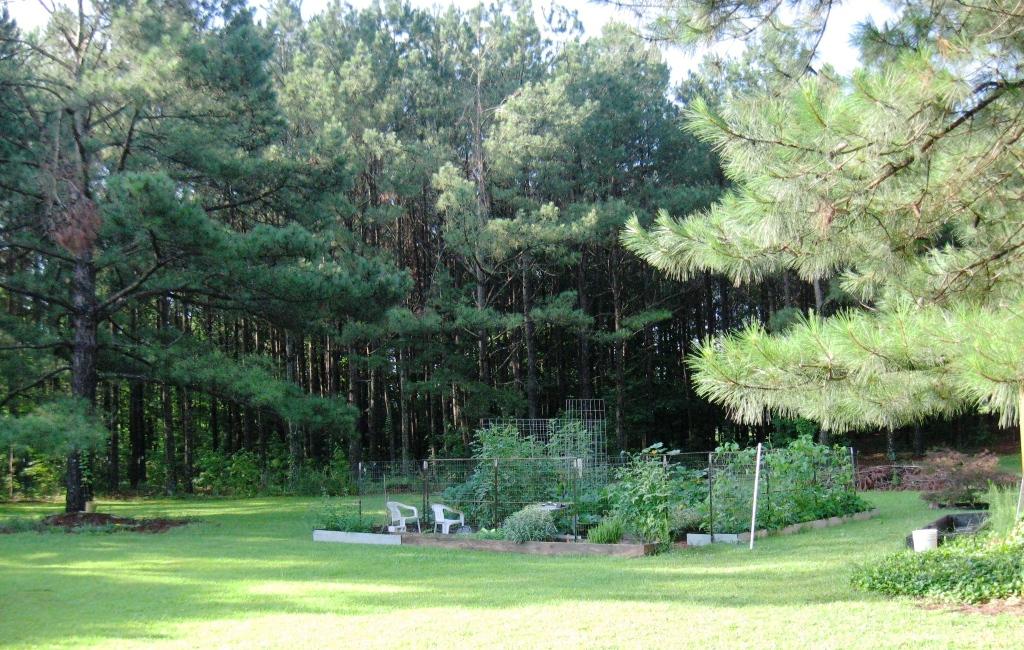
Land and our emotional landscape are often closely tied to each other. The acre and a third most of my writing centres around was orginally bought by my late wife Cynthia, and I. She loved gardening, understood the interconnectedness of life, and I learned a great deal from her in our almost 14 years of marriage before cancer took her.
I have been fortunate enough to marry again, to Stacey, who I love dearly. For her, the garden is a practical place and our conversations about it have been about using it as a space to teach healing. She had seen early on in our relationship how the garden had become a place of burden, not a space in which I was celebrating the vibrancy of the life present everywhere.
Only for someone who has loved deeply and suffered loss will the power of the emotion make any sense. The deep, visceral agony that can sneak up, set off by something seemingly trivial. Place and time can both do it. Some people must move away; for others, that seems like a betrayal. Each must choose what's best for them. In my case, I chose home. It seemed as if I was choosing pain.
This post is not about wallowing. It is about survivor guilt. I didn't understand, nor have a label for this when I was in pain. I could not recognise it. Many people struggling with grief will not be able to see the triggers easily, nor be able to label them. Labelling won't make the emotions less powerful, but by being able to recognise and call them by name, it provides a way to externalise it. In so doing, we can more easily find a way through and understand the causalities involved. We are no longer at the mercy of our emotions, but rather able to more easily ride them out.
In my case, in mid-November several years after Cynthia died, when the days were getting shorter and the switch to daylight saving time seemed to have hastened how soon the darkness arrived in the yard, I was still experiencing difficulty with grief. During the summer, I struggled with similar shadows. I'd be in the garden, watering the cuttings that had rooted, and I'd feel great sorrow at the loss and that she wasn't with me to enjoy the new growth and the promise it held. It reached a point where it was physically painful. And then the next day, I'd find myself unable to be sufficiently interested in starting the day. I'd turn over and try to go back to sleep. Or I'd force myself up, eat breakfast, go to work and grind out the day. By lunchtime, I'd be exhausted. In the afternoon, as hard as I'd try, nothing seemed worth doing.
I'd get lost on the internet, reading. The time would come when I normally would go outside and spend time in the garden, watering the plants, or mowing, or planting something or tackling a project. But outside in the garden was where I'd experienced that complex, tangled ball of pain and grief and happiness, and sadness, and poignancy, and shame at my happiness, and loss the previous day.
And the late afternoon would slip into the evening and four days later I might manage to get outside. The pain of survivor's guilt put me in bed. It made sunny days grey. It made me much, much less productive. It left me lethargic and uncaring. I'd go for two or three days without showering. For those of you who have been in this space, you'll recognise it. There's little to recommend it. My beans were never harvested, so too, some of my basil. I never planted garlic for the winter. But as with our gardens, if we'll work with the season and nurture our plants as the sun moves through the sky and the length of the shadows change, so too with us.
The seasons remind us of the cycles of life - some vibrant and green; some dark and internal; a time to plant and a time to harvest. Emotions remind us that we're alive. It's true for emotions on both sides of the spectrum - the happy and the hard. They just show us different things. It's during winter, when trees have lost their leaves that they can put energy into setting deeper roots.
The difficult emotions are the ones that show us to ourselves most clearly. They expose us, peel us layer by layer, make us uncomfortable. But too often, because we live lives of routine, of sameness, we lose our capacity to live each moment to the full. It's just another day like yesterday. These times of emotional drought, of turbulence, of pain, remind us most powerfully that we have the capacity to feel. We should not waste them, as dark as they are.
I got help. We worked through what I was experiencing, and when. I learned about survivor guilt.
Afterwards, it still took me months of disentangling the threads of grief I feel when I enjoy myself in the garden. But I am able to go back outside again. It's November, so the grass needs raking of pine needles and the needles are spread into the beds around the house. The first year Cynthia asked me to rake, it was an imposition, a chore. But I've grown to appreciate the cool air, the darkening skies, the effort it takes. I enjoy seeing the piles of needles raked together. I enjoy the colour of the fresh needles scattered into the beds as mulch. It reminds me of November. It's become special to me.
Working with survivor's guilt and depression hasn't been easy. I've had to be patient with myself. I've had to engage with the emotions I've felt, feel them, not have them be me, overwhelm me. By turning towards them, going outside and enjoying myself, then pausing when the pain arrives and letting it wash over me, through me, looking back into it and understanding that this pain is me, I've been able to wake up the next morning and get out of bed, alive.
I lost a summer to survivor's guilt and grief. But Autumn is here. The garden calls. My heart is raw, tender; but I am able to enjoy the new life, the leaves on the ground that is a promise of compost and life in the Spring. I am able to go outside without the burden of fear of tomorrow's emotional difficulties. I do not assume that each day I will be unscathed, but like exercise, if we run hard, our muscles hurt. So too, I expect the pain without fearing it. When we are in the heart of a season, it seems endless. But the Earth is moving and the seasons change.
If we are able to work with what we have, the season will end and a new one will begin, offering new opportunity for life and growth. And in the future, a harvest from the wisdom we have learned.

Comments are moderated
We encourage comments on articles and genuinely enjoy hearing from our visitors. However, because of spam, please note that all comments are moderated and and will not immediately appear after you click SEND - so it is not a bug in the system that your comment isn't immediately visible.
Only after Rugged Weeds has reviewed a comment will it be published, should we choose to do so. We reserve the right to not publish comments if they may negatively affect other visitors' experience to this site or understanding of the topic at hand. Thank you.
For people commenting on gardening or therapeutic horticulture posts, please consider including your USDA zone or the temperature range into which your garden falls.
Subscribe
Report
My comments